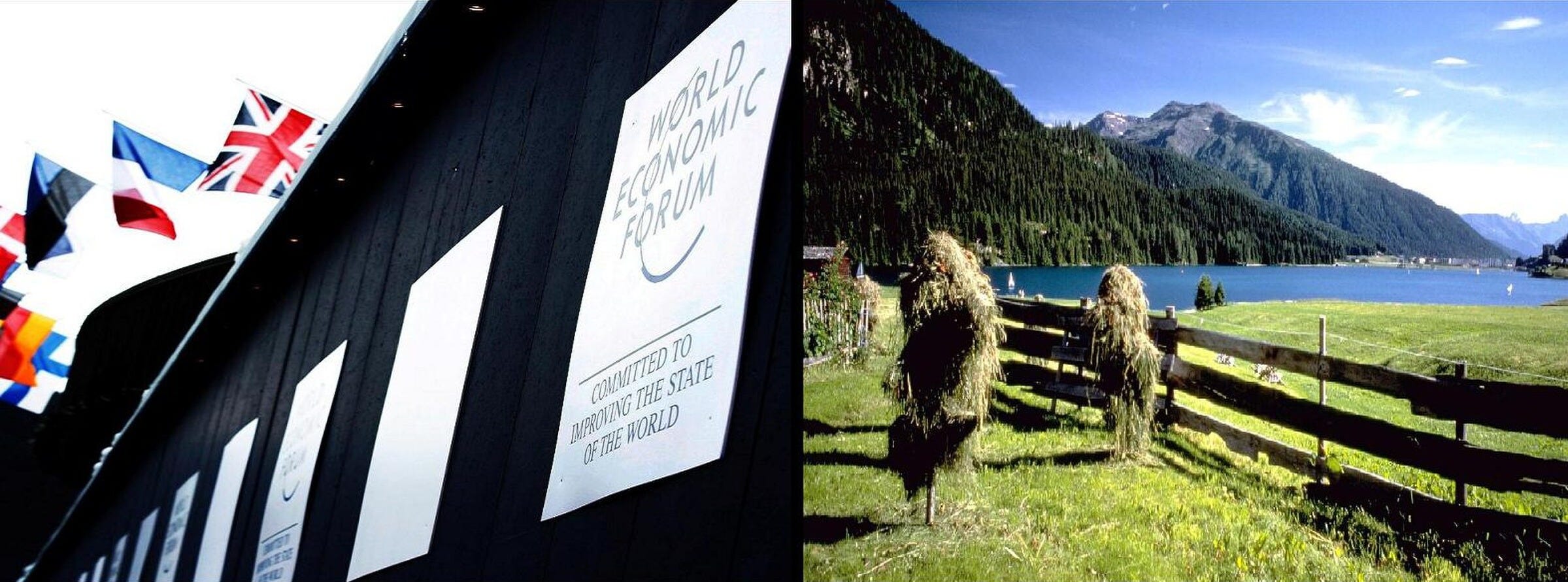
Most of the year, the Alps are sold as a product: snow, pistes, postcard villages, "escape." And then Davos week happens. Suddenly the Alps aren't an escape from the world, they're where the world shows up.
Every year, the World Economic Forum Annual Meeting expects close to 3,000 participants from 130+ countries, with around 400 political leaders and 65 heads of state/government. I'm not writing this as a journalist (I'm not one). I'm writing it as someone building Mr. Alps, obsessed with one question:
What can be a resilient future for the Alps? And Davos is the most extreme, slightly bizarre, very Swiss answer I can think of.
1/4 Davos didn't "become Davos" at once
What clicked for me is that Davos kept switching identities, before it became necessary.
Health: 19th century clean-air / tuberculosis destination.
Culture: Thomas Mann's novel *The Magic Mountain* hardwired Davos into the elite European imagination.
Sport: serious ski destination.
Conference: in 1971 a modest management symposium arrives… and eventually becomes the WEF ritual.
WEF is just the latest layer in a town that's been reinventing itself for more than a century.
2/4 A model of reinvention for the Alps at large?
Davos has ~11,000 residents, but around ~28,000 guest beds; and WEF week basically fills them. You can question what the WEF "achieves" for the Davos residents as it comes with housing and transport pressure, emissions, who benefits vs who gets squeezed and the dependency on one event / one image.
But Davos is also a village-size place managing very successfully to generate an identity that has nothing to do with snowfall. Not even really to do with skiing. Most Alpine destinations try to extend the season by adding activities: trail running, wellness, festivals. Sometimes it works. Often it's still fragile. Davos does something different: it anchors one week around something you can't easily copy-paste elsewhere.
3/4 What's different about WEF 2026 (and why it matters for the Alps)
This edition feels unusually tense. Geopolitics is explicitly in the air: tariffs, friction, the future of multilateral cooperation. But alongside the main meeting, WEF's Open Forum includes "the future of our mountain regions" as a topic.
That's rare. Mountain regions usually appear in global conversations as:
- a metaphor ("resilience," "peaks")
- or a background image (literally)
The Alps aren't just scenery. They're territories with real climate and economic constraints, and real choices to make.
4/4 The Davos case study for Alpine villages
A lot of places treat off-season as a marketing problem: "How do we fill beds in April / May / November?". But Davos suggests a different frame: Not "what can we add?" But rather "what do we stand for, year-round?" Davos has answered that question multiple times: health → culture → sport → international summits.
So the practical thought I'm taking back to Mr. Alps (and the 1,300+ villages I'm mapping): The Alpine villages that find purpose won't just diversify activities. They'll build repeatable moments that make them matter.
Not necessarily mega-events. Not stadiums. Not copy-paste festivals.
Smaller, identity-shaped experiences that fit the place. Something concrete that helps mountain regions stay liveable, not just visitable.
Because if Davos has a true "superpower," it's not luxury, and it's not beauty. It's the willingness to reinvent before the old model breaks.